-
Gallup: U.S. Unemployment Rate Increases to 7.4 Per Cent in Mid-November
 According to the latest Gallup Poll.
U.S. unemployment, as measured by Gallup without seasonal adjustment, is 7.4% in mid-November, up from 7.0% in October but below the 7.9% of September. Seasonally adjusted unemployment is 7.9%, up from 7.4% in October but slightly lower than September’s 8.1%.
The American economy continues in the doldrums.
Let’s hope a good Christmas retail season bolsters employment some.
But, the elephant in the closet is the impending implementation of ObamaCare and business being leery of increasing their number of employees at the same time.
Gallup’s unemployment results for the 30 days ending on Nov. 15 suggest that the improvement in the U.S. unemployment situation found in October was short-lived. Still, on an unadjusted basis, Gallup’s unemployment and underemployment measures over the past two months show what might be expected holiday seasonal improvement. U.S. companies increase hiring for the Christmas holidays at this time of year.
At the same time, superstorm Sandy distorted weekly jobless claims, according to the U.S. Bureau of Labor Statistics, and may be doing the same to Gallup’s unemployment results. The presidential election may also have disrupted the job market for a few days in early November.
Taking seasonal factors into account, it appears that the unemployment rate has remained around 8.0% since May. This seems consistent with other general economic data showing the economy growing slowly, the most recent of these being the 0.3% decline in October retail sales.
-
Gallup: Mid-October U.S. Unemployment Rate Falls to 7.3 Per Cent

According to the latest Gallup Poll.
U.S. unemployment, as measured by Gallup without seasonal adjustment, is 7.3% in mid-October, down considerably from 7.9% at the end of September and at a new low since Gallup began collecting employment data in January 2010. Gallup’s seasonally adjusted unemployment rate is 7.7%, also down from September. October’s adjusted mid-month measure is also more than a percentage point lower than October 2011.
These results are based on Gallup Daily tracking surveys conducted by landline and cell phone with more than 30,000 U.S. adults from Sept. 16-Oct. 15. Gallup’s seasonally adjusted unemployment rate incorporates the .04 upward adjustment used by the U.S. Bureau of Labor Statistics (BLS) in October of last year. The adjustment for September was an increase of .02, which explains the .04 drop in seasonally adjusted employment despite the .06 decline in the unadjusted number.
Good news for Americans.
Underemployment is also down.
Gallup’s U.S. underemployment measure combines the unemployed with those working part time but wanting full-time work. The underemployment rate is at its lowest mid-month or monthly level Gallup has measured since it began collecting employment data in 2010.
Here is the chart:
 What does this mean?
Remember this is Gallup’s own polling and is not the official goverment Bureau of Labor Statistics which will later this month have the official unemployment rate figures.
There are three weeks left to the Presidential campaign and while this downward trend is substantial, it may be too little and too late to affect positively the public perception that the American economy is improving.
The decline in unemployment but uptick in the number of Americans working part time but looking for full-time work is likely the result of seasonal hiring, which picks up in the fall for Halloween and continues through the end of the holiday season. Still, seasonally adjusted employment, which accounts for these types of periodic fluctuations, has declined modestly since the end of September. This is a promising sign that employers are adding jobs that will last into the new year.
Gallup’s mid-month unemployment numbers are a good early predictor of the monthly numbers released by the BLS. The decline in Gallup’s unadjusted and adjusted employment rate suggests that the BLS may report another decline when it releases the October data on Nov. 2.
-
Gallup: American Unadjusted Unemployment Rate Is 8.1 %
According to the latest Gallup Poll:
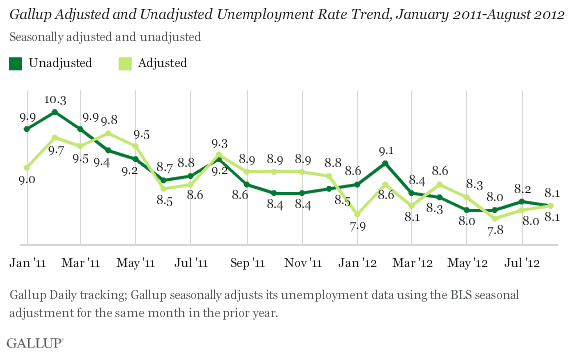
U.S. unemployment, as measured by Gallup without seasonal adjustment, is 8.1% for the month of August, down slightly from 8.3% measured in mid-August and 8.2% for the month of July. Gallup’s seasonally adjusted unemployment rate for August is also 8.1%, a slight uptick from 8.0% at the end of July.
These results are based on Gallup Daily tracking interviews, conducted by landline and cell phone, with more than 30,000 Americans throughout the month. Gallup calculates a seasonally adjusted unemployment rate by applying the adjustment factor the government used for the same month in the previous year. The government adjusted its July numbers downward last year, but made no adjustment in August, which accounts for the increase in seasonally adjusted unemployment despite the decline in the unadjusted number.
U.S. unemployment declined significantly during the first part of the year, but August marks the third straight month with little change in the unadjusted number. Gallup’s estimate of adjusted unemployment has increased by 0.3 percentage points since June. Despite the lackluster jobs growth, August’s 2012 unadjusted and adjusted unemployment are each more than a full point lower than they were in August 2011.
Underemployment is also down a bit.
Underemployment, as measured without seasonal adjustment, was 17.1% in August, unchanged from the end of July but significantly improved from 18.5% a year ago. Gallup’s U.S. underemployment measure combines the percentage who are unemployed with the percentage of those working part time but looking for full-time work. Gallup does not apply a seasonal adjustment to underemployment.
The pundits anxiously await the BOL official jobs numbers on Friday. If the numbers show a declining unemployment rate, then President Obama may have a bigger bounce in his re-election poll numbers.
However, with the Obama re-election folks trying to loser expectations on the eve of the President’s acceptance speech tonight, I suspect these numbers will be slightly improved or unchanged.
The decline in unemployment seen earlier in the year has not been sustained, with unadjusted unemployment flat over the past three months. Although there is no longer a net loss of jobs, employers are not adding enough jobs to dramatically reduce the unemployment rate.
Gallup’s slight increase in seasonally adjusted unemployment indicates that the unemployment rate the Bureau of Labor Statistics releases on Friday will likely remain flat and possibly increase by a tenth of a point.
Unemployment hovering just above 8.0% could have important implications for President Barack Obama as the election nears. The only incumbent president since 1912 to win his re-election bid when the unemployment rate exceeded 8.0% was Franklin Roosevelt, who was re-elected as the U.S. recovered from the Great Depression. What may matter more, though, is the direction of the unemployment rate, which provides mixed signals for Obama’s chances — improving earlier this year but leveling off in recent months.
-
Gallup: United States Unemployment Rate Up in July to 8.2%

According to the latest Gallup poll.
U.S. unemployment, as measured by Gallup without seasonal adjustment, was 8.2% in July, up slightly from 8.0% in June, but better than the 8.8% from a year ago. Gallup’s seasonally adjusted number for July is 8.0%, an increase from 7.8% in June.
These results are based on Gallup Daily tracking interviews, conducted by landline and cell phone, with almost 30,000 Americans throughout the month. Gallup calculates a seasonally adjusted unemployment rate by applying the adjustment factor the government used for the same month in the previous year. July data by demographic group are found on page 2.
Unemployment had previously dropped to 7.9% in mid-July, the lowest it has been since Gallup began tracking employment daily in 2010. However, the improvement was short-lived, and unemployment increased during the second half of the month.
Underemployment has declined:
Underemployment, however, did decline — for the third straight month in July, to 17.1%, the lowest since Gallup started collecting employment data. Gallup’s U.S. underemployment measure combines the unemployed with those working part time but looking for full-time work. Gallup does not apply a seasonal adjustment to underemployment.
Here is the summary chart for July:
 So, what does this all mean?
The unemployment rate and workforce participation rate are not improving at a very rapid rate. They are flat at best.
The American economy continues in the doldrums and with the job creation rate also down, the economy will remain a prime Presidential campaign issue.
-
Gallup: U.S. Unemployment Down to 7.9% in Mid-July
 According to the latest Gallup Poll.
U.S. unemployment, as measured by Gallup without seasonal adjustment, was 7.9% in mid-July, down 0.1 percentage points from June and May. Gallup’s seasonally adjusted unemployment rate also declined 0.1 points, to 7.7% in mid-July.
These results are based on Gallup Daily tracking surveys conducted from June 15 to July 15, including interviews with more than 30,000 U.S. adults — 68.0% of whom are active in the workforce. Gallup’s seasonally adjusted unemployment rate incorporates the adjustment used by the U.S. Bureau of Labor Statistics in the same month of the previous year.
On both an unadjusted and an adjusted basis, the mid-July unemployment readings, if sustained the rest of the month, would be the lowest monthly rates since Gallup began tracking unemployment daily in January 2010. Gallup’s adjusted unemployment rate incorporates the downward seasonal adjustment of 0.2 points the BLS applied in July 2011. Gallup’s unadjusted unemployment rate for July 2011 was 8.8% and the adjusted rate was 8.6% — both substantially higher than they are now.
And, underemployment has decreased to the lowest levels since 2010.
 So, what does this mean?
There has NOT been any dramatic improvement in the American unemployment rate for the past three months. Although the rate is a little better than last year, it is not good news for folks looking for a job or incumbent politicians
-
Jobs Report: 8.2 % Unemployment Rate With 80K Jobs Created

The Friday jobs report is out and it is, well, not so good – especially for President Obama.
The U.S. economy created just 80,000 jobs in June and the unemployment rate held steady at 8.2 percent, reflecting continued slow growth in the economy with the presidential election just four months away.
The Bureau of Labor Statistics said private payrolls increased 84,000, while the government lost 4,000 jobs. Economists expected job growth of about 100,000 and the unemployment rate to be unchanged, though many had increased their forecasts based on some recent indicators.
With yet another month of weak employment growth, the second quarter marks the worst three-month period in two years. The period averaged just 75,000 per month, against 226,000 in the first quarter, which benefited from an unusually mild winter.
May’s weak initial 69,000 report was revised upward to 77,000, which made the June growth essentially the same. The April number was revised lower, from 77,000 to 68,000.
“What a disappointing number,” said Jeff Savage, regional chief investment officer for Wells Fargo Private Bank. “This was kind of disastrous. We’re not even keeping up with demographics at this point. This is not going to be liked in the markets.”
The stock market, where futures had been essentially flat before the jobs number was released at 8:30 am ET, fell sharply, though that disappointment could be tempered by hopes of more stimulus from Washington.
With Mitt Romney falling in the polls lately, this should re-ignite his campaign and refocus his narrative on jobs and the economy.
President Obama may have won a victory when the Supreme Court ruled ObamaCare constitutional, but the economy is still not growing and the unemployment rate is high.
-
Gallup: May Unemployment Rate Drops to 8.0%

U.S. unemployment, as measured by Gallup without seasonal adjustment, dropped to 8.0% in May, a new low since Gallup began measuring employment in 2010, and more than a full percentage-point decline from May 2011. Gallup’s seasonally adjusted number for May is 8.3%, down from 8.6% in April. However, that remains higher than the seasonally adjusted low of 7.9% recorded in January 2012.
The unemployment rate is better, but the conventional wisdom is that the economy, if anything, is stagnant.
Tomorrow the U.S. government’s unemployment’s numbers will be out via the Bureau of Labor Statistics.
Despite recent drops in unemployment reported by Gallup and the U.S. Bureau of Labor Statistics, the U.S. employment situation remains fragile. Although Gallup’s unadjusted number is at a new two-year low, the adjusted number remains higher than January’s number, suggesting that the recent declines reported by the BLS may not continue. Further, many demographic groups, including young adults and minorities, continue to be burdened by unemployment rates that are significantly higher than the national average. Substantial improvements will need to be made before these groups feel relief.
Still, the situation is better than it was a year ago, and underemployed workers in the U.S. seem to sense positive momentum and are more optimistic about finding work than they were at the beginning of the year.
-
Gallup: U.S. Unemployment Decreases Slightly to 8.2%

According to the latest Gallup unemployment poll.
U.S. unemployment, as measured by Gallup without seasonal adjustment, declined slightly to 8.2% in mid-May from 8.3% in April. Gallup’s seasonally adjusted unemployment rate is 8.5% in mid-May, down slightly from 8.6% last month.
These results are based on Gallup Daily tracking interviews conducted over the 30 days of April 16 to May 15, including interviews with 30,236 U.S. adults, 67.5% of whom are active in the workforce. Gallup’s seasonally adjusted unemployment rate incorporates the adjustment used by the U.S. Bureau of Labor Statistics in the same month of the previous year.
On an unadjusted basis, the mid-May unemployment rate, if sustained the rest of the month, would represent a new monthly low in unemployment since Gallup began tracking it daily in January 2010, down from the previous low of 8.3% recorded last month and from 9.2% last May.
Incorporating the upward seasonal adjustment of 0.3 percentage points that the BLS applied last May yields a seasonally adjusted rate for mid-May of 8.5%. This is substantially higher than the seasonally adjusted monthly low of 7.9% for Gallup’s U.S. unemployment rate in January of this year, but significantly lower than the 9.5% in May 2011.
Nothing earth shattering here with the unemployment rate.
A big drop is what the Democrats and President Obama’s re-election campaign wants, but I do not think this will happen anytime soon.
Underemployment is also down slightly.
Gallup’s U.S. underemployment measure, which combines the unemployed with those working part time but looking for full-time work, is 18.0% in mid-May, compared with 18.2% in April. The underemployment rate declined to as low as 18.0% last July but changed direction in August. It increased to 19.1% in February before plunging to 18.0% in March and 18.2% last month.
So, what this mean?
There is slow American economic growth and American businesses may be holding back because of either the upcoming election or the Supreme Court’s ruling on ObamaCare.
Also, in a warning sign for the government, unemployment numbers may have improved a little, simply due to the fact that long term unemployed people have stopped looking for work.
Moreover, there is also considerable variance of Gallup’s unemployment numbers and those released by the Obama Administration. Go figure.
Gallup’s unemployment measurements now and in April stand in sharp contrast to those the government provided. The BLS reported an April unadjusted unemployment rate of 7.7% and an adjusted unemployment rate of 8.1%. These findings were generally seen as inconsistent with the state of the economy and the findings of the BLS payroll survey. There were not enough jobs created last month — even after the size of the workforce declined — to lower the unemployment rate as much as the government reported.
It is possible that the government’s unemployment numbers for May could revert back to the Gallup trend, as occurred in March and during much of late 2011. Still, there was a considerable gap between Gallup’s results and those of the government in February and April. Regardless, Gallup’s preliminary unemployment numbers for May, based on continuous daily measurement, show a slight improvement compared with April.
-
Economic Growth Stalls as Unemployment Decreases to 8.1%
 The Obama economy continues to under perform as the American unemployment rate decreases to 8.1 per cent.
The nation’s economy added 115,00 jobs in April while the unemployment rate dropped one-tenth of a point to 8.1 percent, according to a report released Friday—the day before President Obama officially launches his campaign.
The figures from the Bureau of Labor Statistics are lower than a month ago and were also below what many analysts had expected. They also showed the nation’s labor participation rate dropping to a 30-year low of 63.6 percent, suggesting workers continue to leave the labor force because their job prospects are so grim.
The dismal numbers add to the sense that the labor market is cooling down after months of stronger growth, and come as unwelcome news for Obama, whose campaign launch includes rallies in Virginia and Ohio on Saturday.
Obama’s likely GOP rival Mitt Romney is hammering the president on the economy, which Romney sees as his best argument for reaching the White House.
This is not good news for President Obama especially with his re-election campaign starting tomorrow.
Look for Romney to seize the opportunity and begin to run economic-centric ads in key battleground states.
-
Gallup Poll Watch: U.S. Unemployment Rate Falls in March But…
 According to the latest Gallup Poll.
U.S. unemployment, as measured by Gallup without seasonal adjustment, declined to 8.4% in March from 9.1% in February, while Gallup’s seasonally adjusted rate fell to 8.1% from 8.6% in February.
These results are based on Gallup Daily tracking interviewing conducted in March, including interviews with 31,283 U.S. adults, 67.8% of whom are active in the workforce. Gallup’s seasonally adjusted unemployment rate is based on the adjustment used by the Bureau of Labor Statistics in the same month of the previous year.
On an unadjusted basis, the March unemployment rate matches the previous low since Gallup began monitoring and reporting unemployment in January 2010. The unadjusted unemployment rate was last at 8.4% in October and November 2011. On a seasonally adjusted basis, March’s 8.1% reading is near the monthly low of 7.9% for Gallup’s U.S. unemployment rate, seen in January of this year. In both cases, Gallup trends show the U.S. unemployment rate declining dramatically over the past year.
This is some good news for the American economy. And, why President Obama has been rising in the polls, as of late.
Americans are feeling better about their jobs and their economic job prospects.
Underemployment has dramtically fallen.Gallup’s U.S. underemployment measure combines those unemployed with those working part time but looking for full-time work. As a result of sharp declines in both of these groups, the underemployment rate, on an unadjusted basis, fell to 18.0% in March from 19.1% in February 2012. The underemployment rate declined to as low as 18.0% last July before reversing course in August; it also increased from November through January.
Here is the chart:
Now, these numbers are from Gallup and not the government, Bureau of Labor Services. Here is the comparison chart:
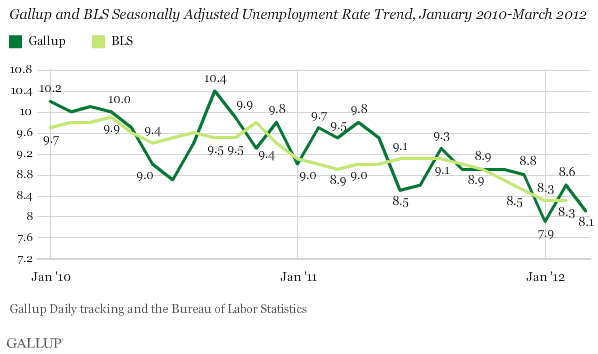
Whichever the numbers, there is a decided downward trend = good news for Americans.
So, what does this all mean?
Gallup’s seasonally adjusted unemployment rate decreased in March to 8.1%, slightly higher than January’s 7.9% reading but an improvement from 8.5% in Gallup’s preliminary mid-March estimate. The March and January rates are the two lowest since Gallup began monitoring and reporting unemployment in January 2010. They are also consistent with Gallup’s other behavioral economic data for March showing a new high in Gallup’s Economic Confidence Index and a post-recession high in its Job Creation Index as well as strong consumer spending.
While the sharp drop in the U.S. unemployment rate during recent months is clearly good news, it raises some significant economic questions. Traditional economic analysis raises the question of why the unemployment rate is falling much more rapidly than can be justified by the modest pace of current economic growth. Answering this question is essential to determining the sustainability of the declining trend in unemployment.
Federal Reserve Board Chairman Ben Bernanke made this issue the centerpiece of his recent speech to the National Association for Business Economics, noting, “the better jobs numbers seem somewhat out of sync with the overall pace of economic expansion.” He went on to explain his hypothesis that companies shed many more jobs than necessary during the recession and financial crisis of 2008-2009, and now they are correcting their workforces for this understaffing of the past. The chairman went on to suggest that achieving further declines in the unemployment rate is likely to require a more rapid pace of economic growth going forward.
f Bernanke is right, then the rapid decline in the unemployment rate might be approaching its end as individual businesses achieve a right-sizing of their workforces. Further, traditional economics also suggest that many people who have been sitting on the sidelines waiting for the economy to improve might decide that now is the time to seek a job, increasing the baseline figure used to calculate unemployment. In turn, this could keep the unemployment rate from decreasing or even send it higher, negatively affecting economic confidence and the overall economy — not good news for political incumbents, including the president.
On the other hand, the economy might continue to build on the momentum indicated by the current positive trend in Gallup’s behavioral economic data, or perhaps the economy is already growing faster than the current economic data suggest. Either way, if true, the unemployment rate could fall below 8.0% in the not-too-distant future — particularly if the workforce does not grow — meaning good things for the economy, incumbents, and the president’s re-election effort.
In other words, this decline in unemployment and underemployment may be an outlier from economic activity or a portent for increasing economic growth to come.
Again, stay tuned…
